RFID gate
 Traceability
 Paperless production
 About us
 Partner
 Contact
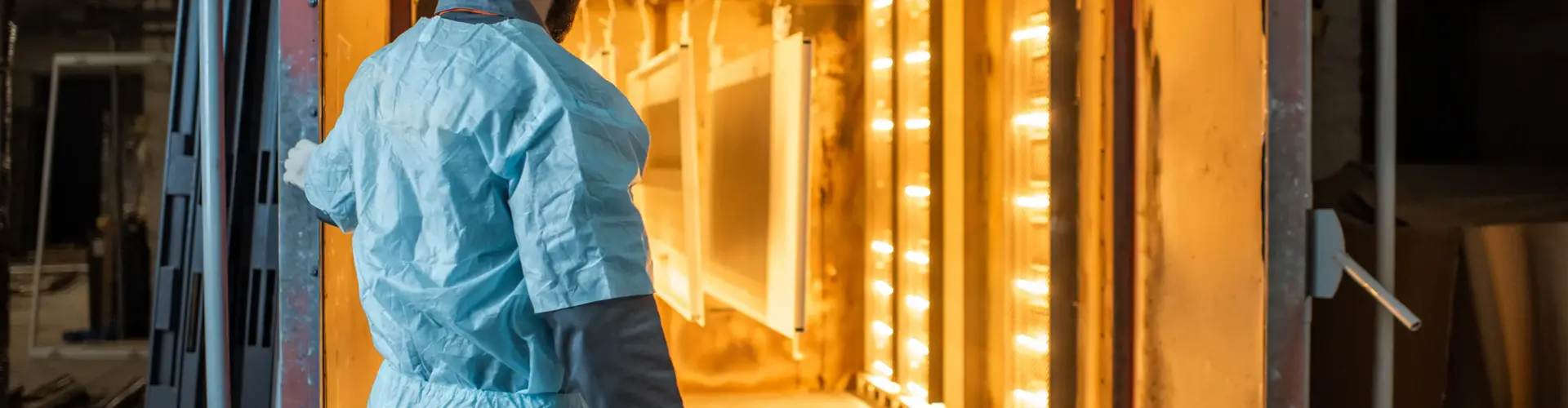

In modern production environments, it is no longer just the machining process itself that determines the quality of a component, but above all the consistent adherence to defined process times.
This is exactly where RFID technology comes into play: It creates transparency, automates decision-making, and minimizes human error.
A particularly practical example is the monitoring of aging processes in metalworking.
Why Time Is Crucial in the Process
After hot forming, a critical time window begins. Components may only be temporarily stored for a defined period before they are placed in the aging furnace. Exceeding this time limit can negatively affect the material properties, with a direct impact on quality, safety, and scrap rates.
Similar requirements are also found in other industries, such as bottle fermentation in the food industry. However, the consequences are often even more severe in metal processing:
Targeted heat treatment (aging) induces a change in the metal’s microstructure, which is crucial for properties such as tensile strength, hardness, and yield strength, particularly in aluminum alloys.
Automated Monitoring Instead of Manual Inspection
With RFID, this critical process is monitored entirely digitally:
- Each component or transport rack is assigned a unique identifier
- Events such as placement, transport, and entry into the furnace are automatically recorded
- The duration of stay outside and inside the furnace is precisely documented
The result: Seamless, objective process control without manual intervention.
Smart Quality Assurance Decisions in Real Time
Components that do not enter the furnace on time are automatically classified as n.i.O. (not okay). They can be specifically removed before they enter downstream processes such as laser cutting.
Using the GRAIDWARE middleware, you can:
- Precisely define inspection zones
- Automatically detect critical areas
- Targeted separation of defective components (e.g., for rework or scrap)
This not only reduces the costs associated with defects, but also prevents defective parts from being processed further in the first place.
Flexible control for changing requirements
A major advantage of modern RFID systems is their adaptability:
- Time slots can be flexibly defined and adjusted
- Product changes can be implemented with minimal effort
- New process specifications can be implemented directly in the system
This flexibility is a decisive competitive advantage, especially in dynamic production environments.
From Quality Management to Process Optimization
What starts out as a simple quality assurance tool quickly evolves into a strategic instrument for production control.
Monitoring functions allow the collected RFID data to be presented visually:
- Real-time overviews of current component statuses
- Early-warning systems for critical time overruns
- Transparency regarding bottlenecks and lead times
Employees immediately recognize:
- Which parts are finished
- Which are within the critical time window
- Which were processed too early or too late
This enables proactive intervention rather than reactive troubleshooting.
Digitalization That Really Makes a Difference
RFID monitoring of aging ovens is a prime example of how digitalization works today:
- Automated data collection instead of paper lists
- Real-time transparency instead of delays
- Clear decisions instead of uncertainties
The result is not only greater process reliability but also a measurable increase in efficiency.
Conclusion: Precision Through Transparency
Adherence to process times is not a minor detail. It is a key quality factor. RFID makes these times visible, monitorable, and controllable.
Companies that digitally monitor their aging processes benefit from:
- lower scrap rates
- more consistent material properties
- more efficient processes